Architecture
System Overview
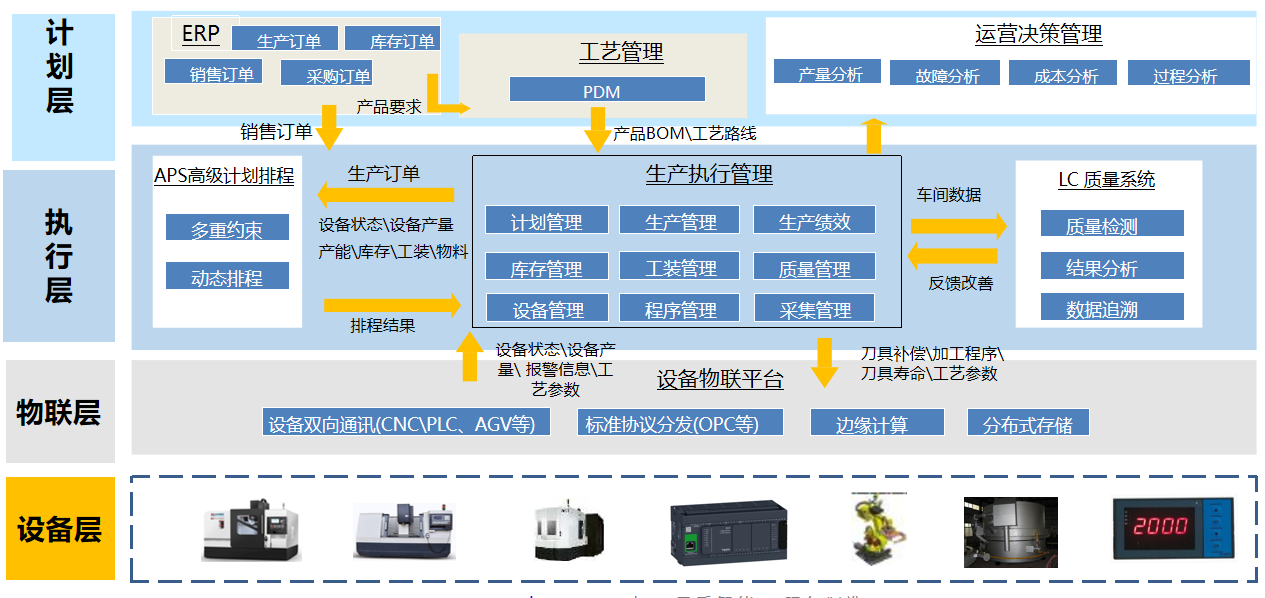
In recent years, with the introduction of new production models such as JIT (Just In Time) and BTO (Production to Order), as well as higher requirements for product quality from customers and the market, MES has been rediscovered and valued. At the same time, after the collapse of the foam of the network economy, enterprises began to realize that they should improve their competitiveness from the most basic production management, that is, only by taking data information from the product level (basic automation level), passing through the operation control level, reaching the management level, and realizing enterprise information integration through continuous information flow can enterprises remain invincible in the increasingly fierce competition. MES is rapidly and widely used abroad.
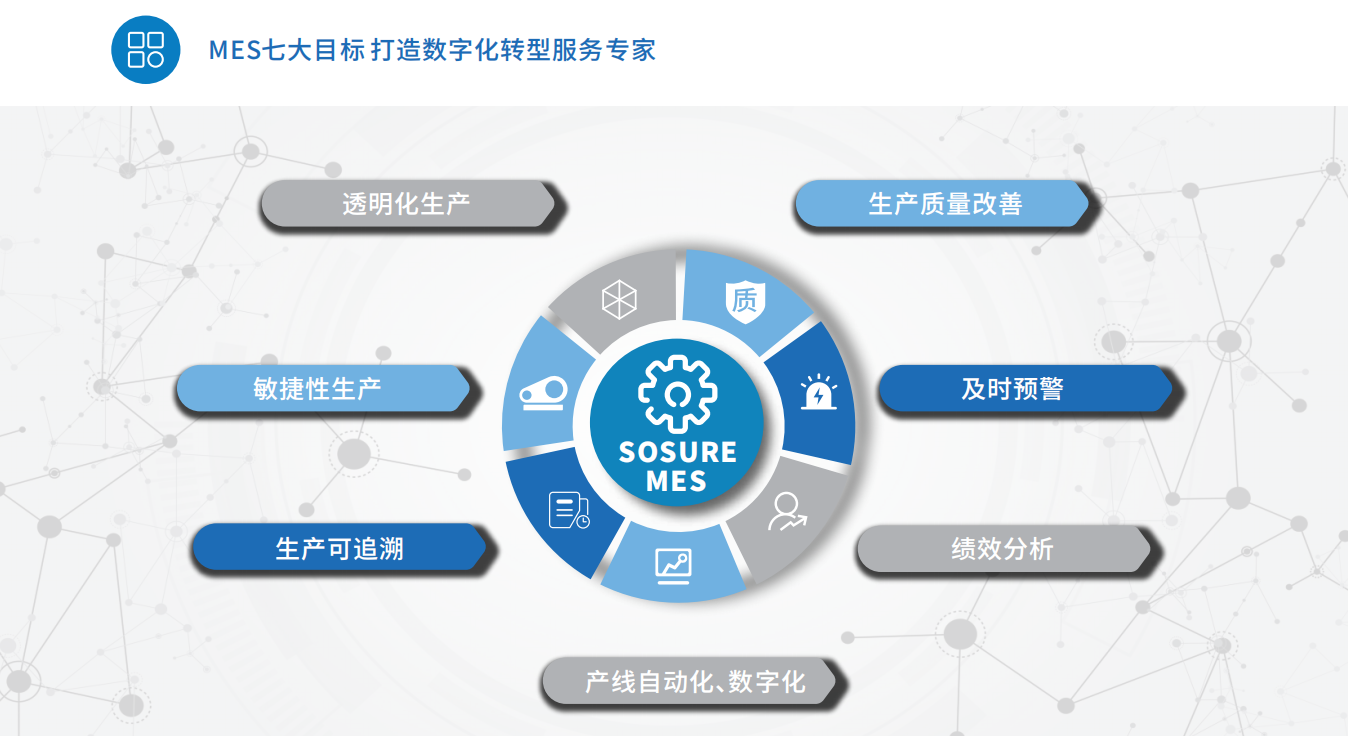
Manufacturing Execution System (MES) aims to enhance the execution ability of enterprises and has irreplaceable functions. In a competitive environment, process industry enterprises should distinguish the goals and roles of different manufacturing management systems, clarify the positioning of MES in integrated systems, attach importance to accurate and timely information, standardize processes, utilize tools, and innovate management. Based on the maturity model of MES, their execution ability should be analyzed, and information integration, transaction processing The gradual implementation of MES systems in the three stages of manufacturing intelligence can fully leverage the role of enterprise informatization, improve enterprise competitiveness, and bring expected benefits to enterprises.
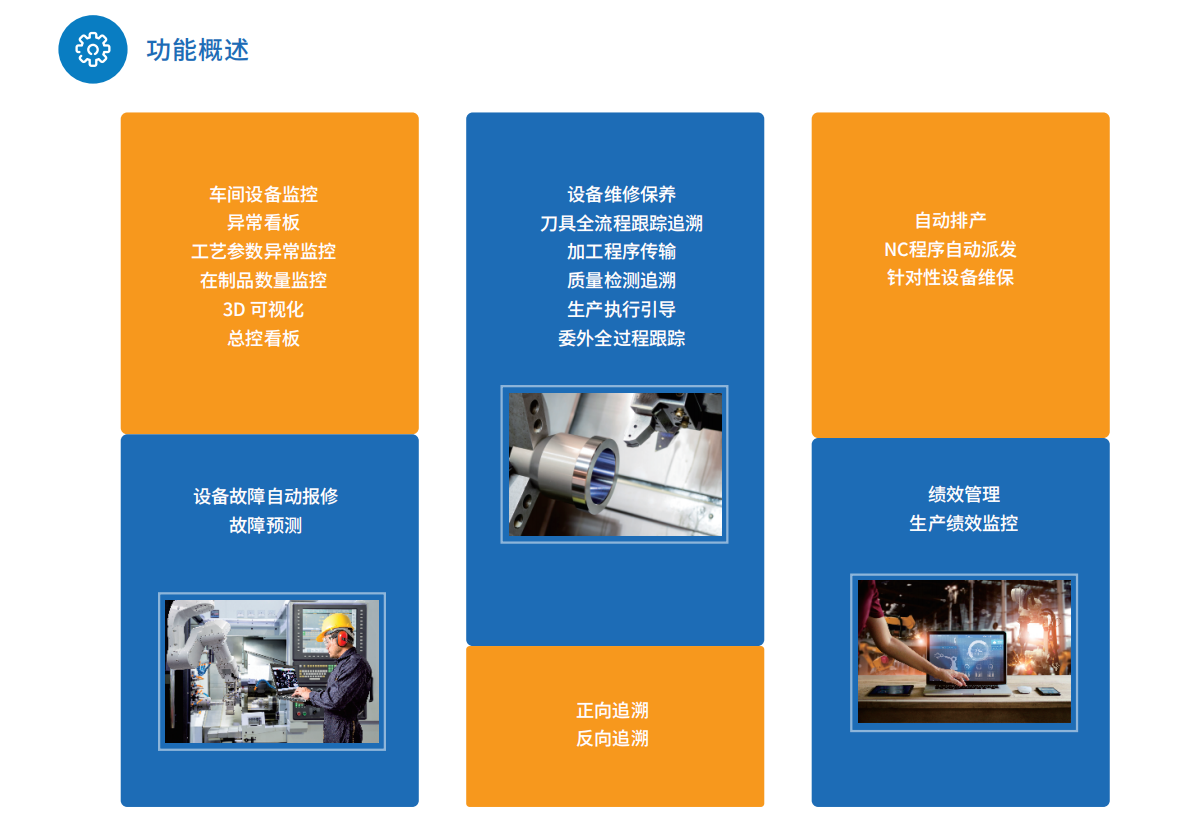
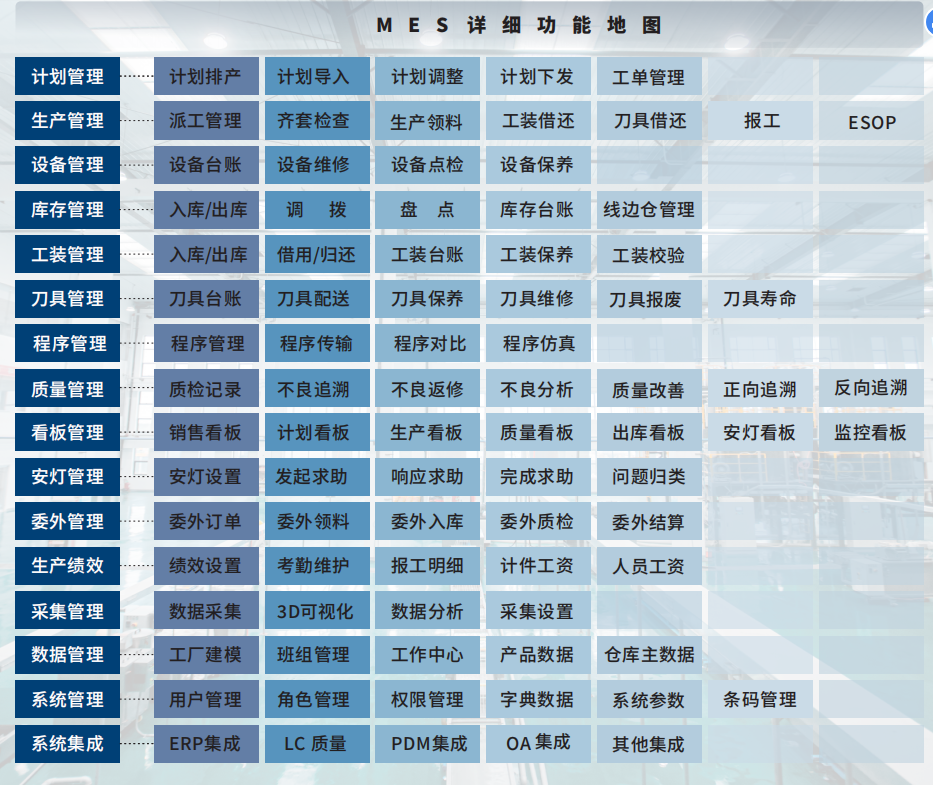
MES system is a production information management system aimed at the execution layer of the workshop in manufacturing enterprises. MES can provide enterprises with management modules including manufacturing data management, planning and scheduling management, production scheduling management, inventory management, quality management, human resource management, work center/equipment management, tool and fixture management, procurement management, cost management, project management, production process control, bottom level data integration analysis, and upper level data integration decomposition, creating a solid, reliable, and comprehensive management system for enterprises A feasible manufacturing collaborative management platform.
System Function Points